How Regular Low Slope Roof Care Can Prevent Commercial Roof Damage in Pierre SD
A commercial roof does not have to look severely damaged before it becomes a serious concern. For buildings with low-slope roofing systems, small problems can gradually develop into leaks, insulation damage, ponding water, membrane deterioration, and expensive repairs.
That is why low slope roof maintenance should be treated as an ongoing part of commercial property care rather than something to consider only after a leak appears.
In Pierre, SD, commercial roofs can experience changing weather conditions throughout the year. Snow, rain, wind, temperature fluctuations, and moisture can all place stress on roofing materials. Regular inspections and timely maintenance can help property owners identify vulnerable areas before they become major problems.
For businesses looking for a practical low slope roof maintenance guide Pierre SD, understanding what to inspect, when to schedule maintenance, and how to respond to early warning signs is an important first step.
Why Low Slope Roof Maintenance Matters for Pierre SD Businesses
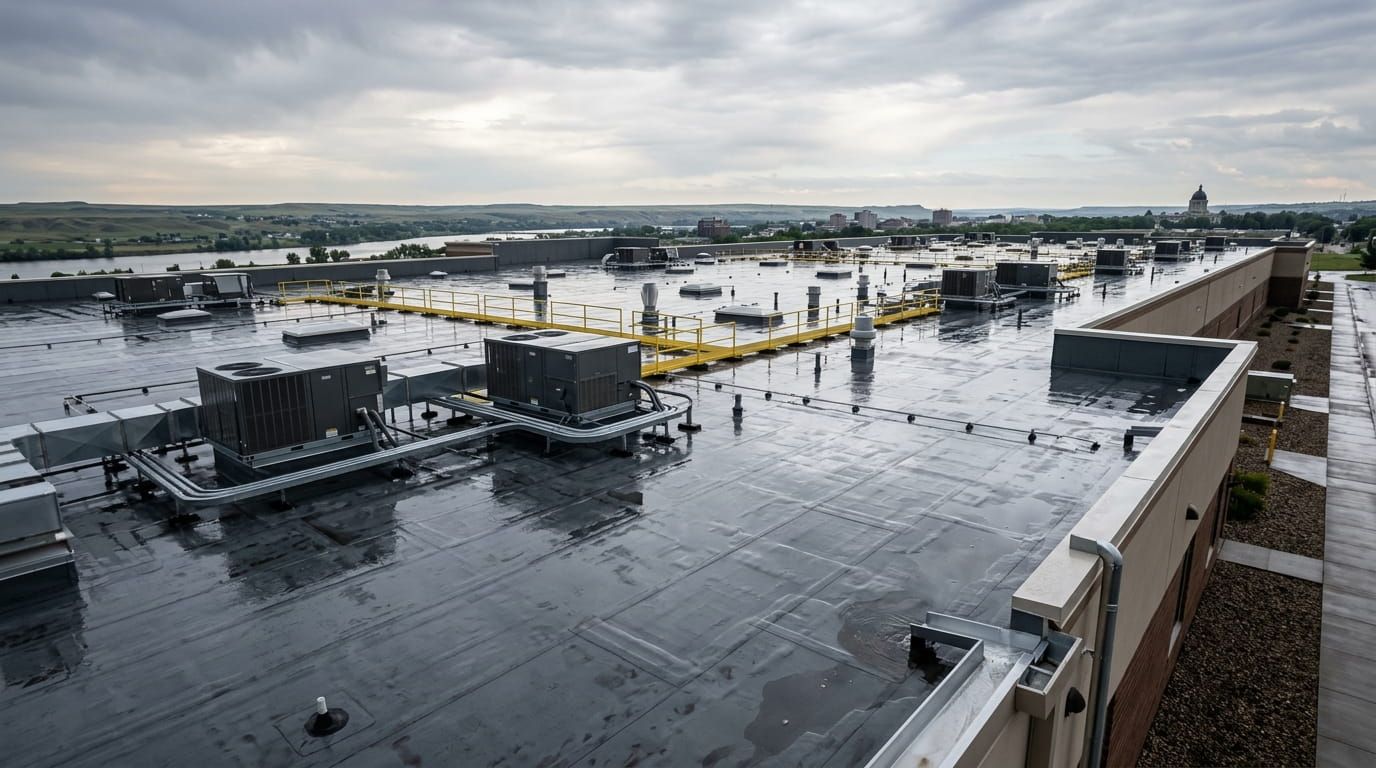
Low-slope roofing systems are designed with a gentle slope rather than the steep pitch commonly seen on residential roofs. Because the slope is limited, water needs properly designed drainage pathways to move away from the roof surface.
When drains, scuppers, gutters, or other drainage components become blocked, water may remain on the roof for longer periods. Over time, standing water can contribute to membrane deterioration, leaks, flashing problems, and damage to underlying roofing components.
Consistent low slope roof maintenance helps commercial property owners stay ahead of these issues.
A routine maintenance program can include:
- Visual roof inspections
- Checking seams and membrane surfaces
- Inspecting flashing and penetrations
- Removing debris
- Checking drainage components
- Looking for ponding water
- Examining roof edges
- Identifying damaged insulation or roofing materials
- Scheduling repairs when minor defects are discovered
The goal is simple: find manageable problems before they become disruptive commercial roof failures.
How Weather Can Affect Low Slope Commercial Roofing in Pierre SD
Weather is one of the biggest reasons commercial property owners should pay attention to low slope commercial roofing Pierre SD systems.
A roof may experience repeated cycles of moisture, freezing temperatures, thawing conditions, wind, and precipitation. These conditions can gradually expose weaknesses that may not be obvious from the ground.
For example, a small opening around a roof penetration may initially cause little visible damage. However, repeated moisture exposure can allow water to reach materials beneath the roof membrane.
Regular low slope roof maintenance gives building owners an opportunity to discover these vulnerable areas earlier.
Low Slope Roof Maintenance Starts With Routine Inspections
One of the most valuable parts of a low slope roof maintenance guide Pierre SD is understanding the importance of routine inspections.
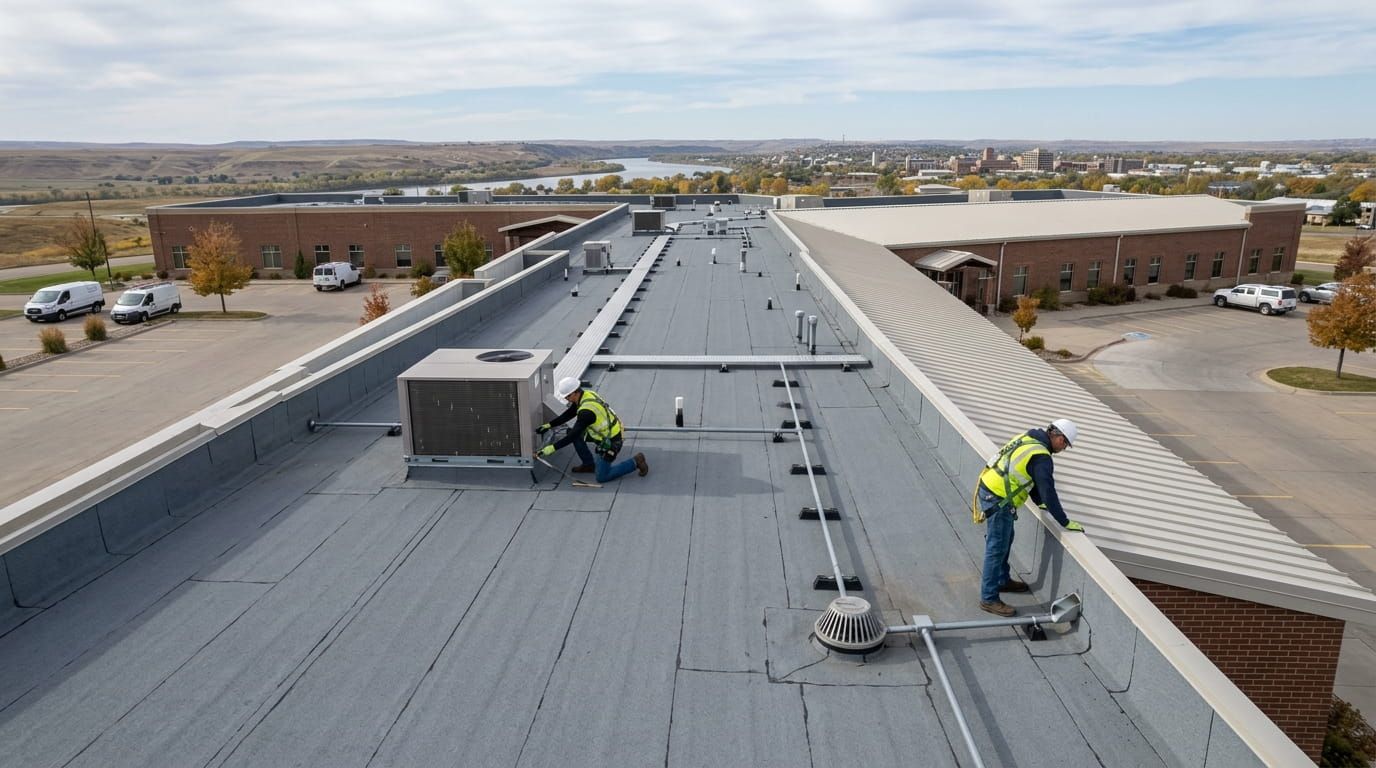
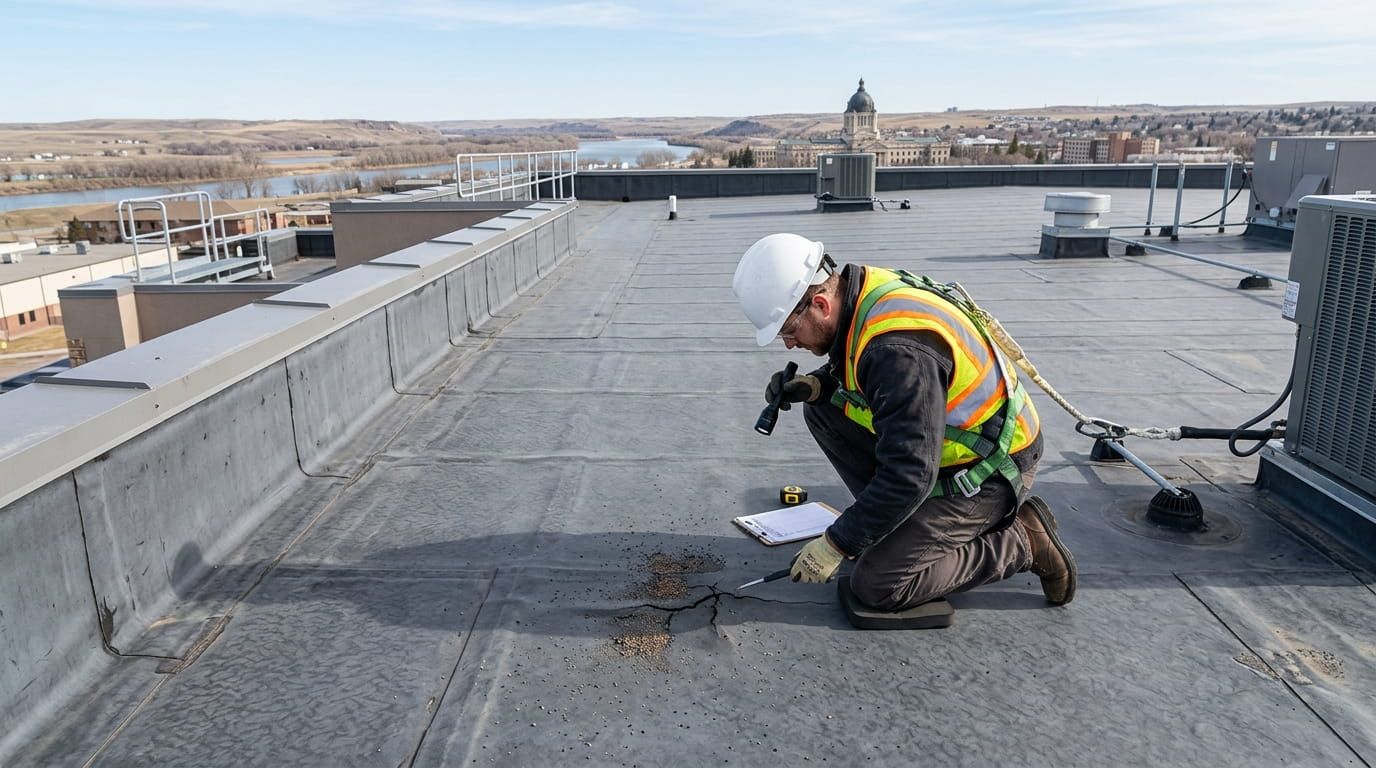
A professional inspection should look beyond obvious leaks. The roof surface, seams, flashing, drainage areas, penetrations, edges, and other components should be evaluated for signs of deterioration.
Property owners should pay attention to warning signs such as:
- Bubbling or blistering
- Cracked or deteriorated membrane areas
- Loose or damaged flashing
- Open seams
- Damaged roof edges
- Accumulated debris
- Standing water
- Interior ceiling stains
- Unusual moisture around roof penetrations
Finding these conditions early can make repairs more manageable and may help prevent more extensive commercial roof damage.
How Roof Drainage Maintenance Prevents Water Damage
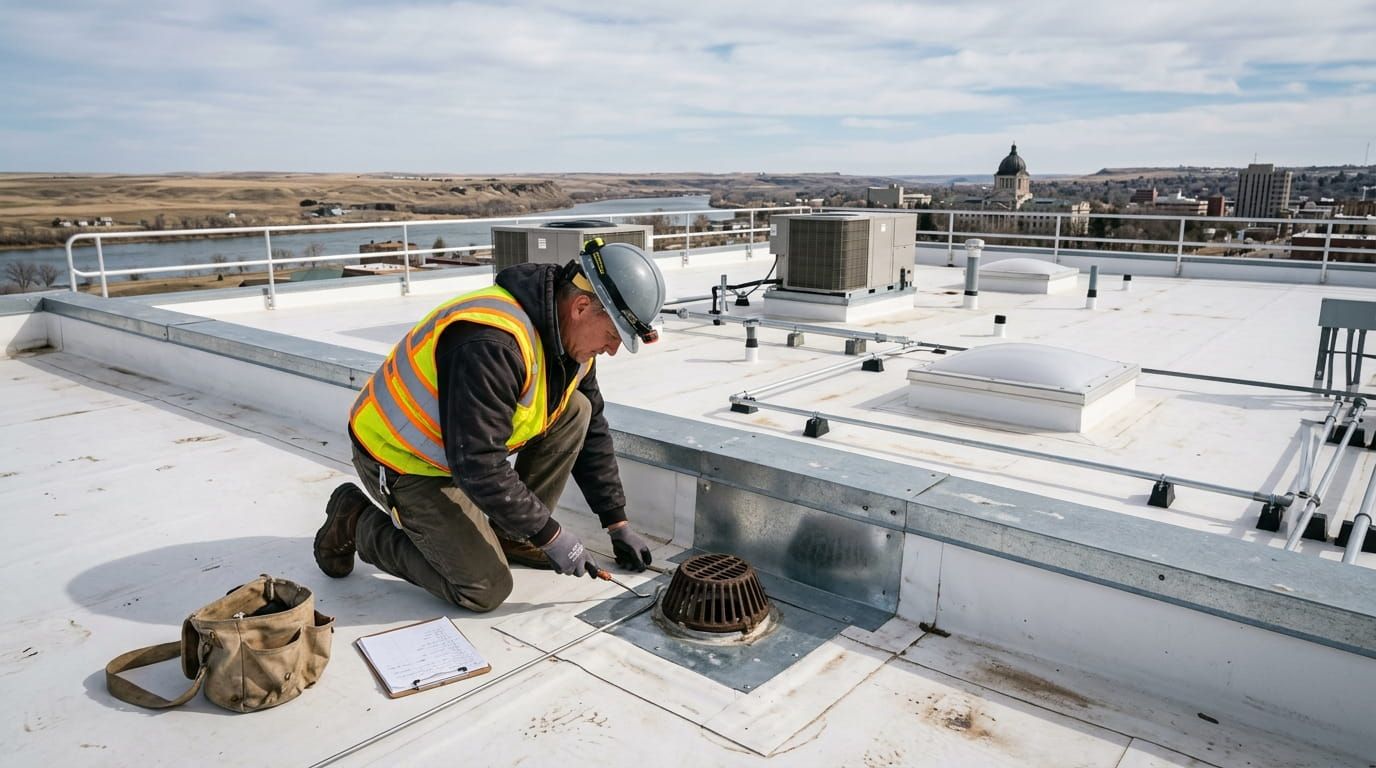
Proper roof drainage maintenance is an essential part of low slope roof maintenance.
Unlike steep roofs where gravity quickly moves water toward the edges, low-slope systems depend heavily on properly functioning drainage components.
Blocked drains and drainage pathways can allow water to accumulate. Heavy debris can also interfere with normal water movement.
A regular maintenance routine should therefore include checking:
- Roof drains
- Scuppers
- Gutters
- Downspouts
- Drainage channels
- Areas where water commonly collects
If ponding water repeatedly appears in the same location, it should not simply be ignored. The underlying drainage condition may need professional evaluation.
Practical Flat Roof Maintenance Tips for Commercial Property Owners
Although every roofing system is different, several flat roof maintenance tips can help commercial property owners reduce avoidable problems.
Keep the Roof Surface Clear
Leaves, branches, trash, and other debris can interfere with drainage and trap moisture against roofing materials.
Watch for Ponding Water
Water that remains on the roof after normal drainage should be investigated, particularly when it occurs repeatedly.
Inspect Flashing
Flashing around walls, curbs, vents, and penetrations can become vulnerable over time. Damaged flashing may create pathways for water intrusion.
Check Roof Penetrations
HVAC equipment, vents, pipes, and other penetrations create potential weak points. These areas deserve attention during inspections.
Avoid Unnecessary Roof Traffic
Repeated foot traffic can damage certain roofing materials. Maintenance personnel should use appropriate access practices and avoid unnecessary movement across vulnerable areas.
Address Small Problems Promptly
A minor seam issue or damaged flashing component may be easier and less expensive to address than widespread water damage.
EPDM Roof Maintenance Can Help Extend Roof Performance
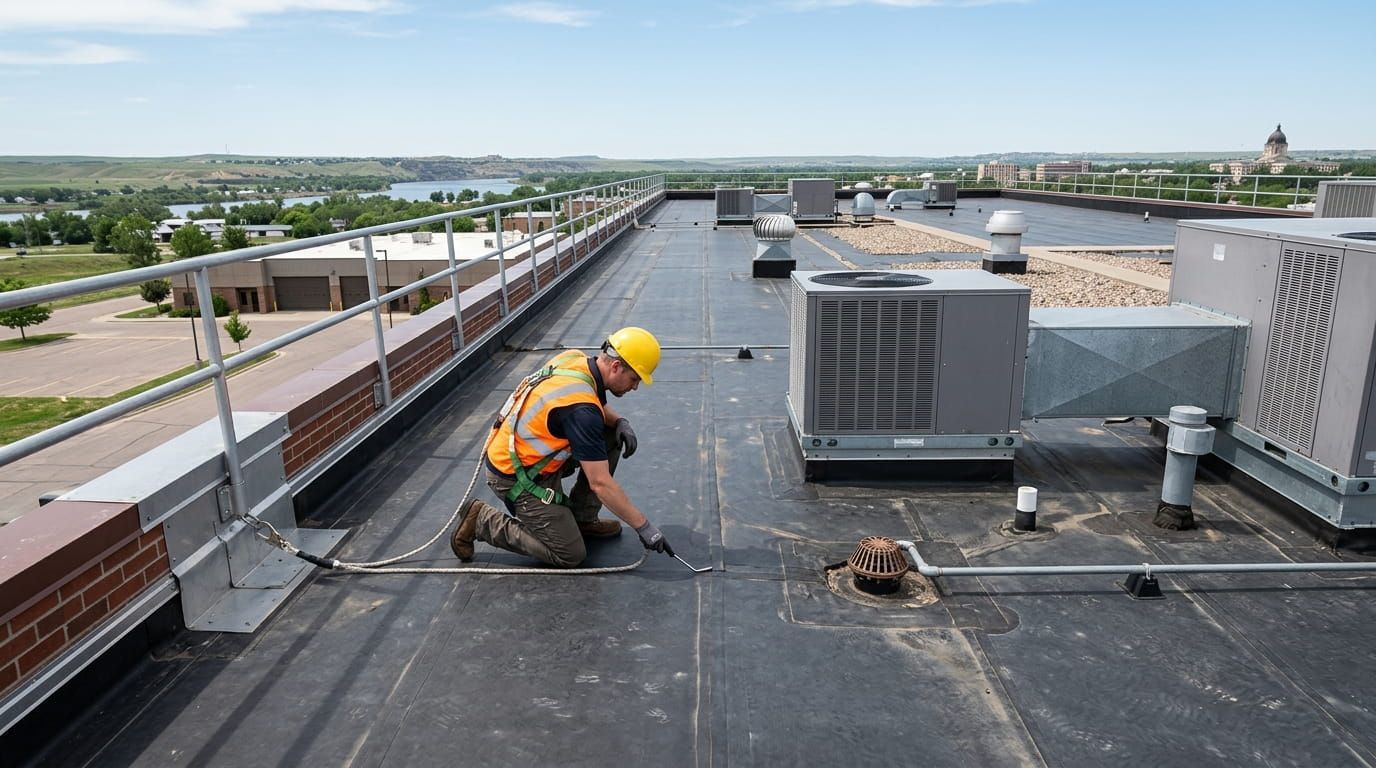
Many commercial buildings use membrane roofing systems, including EPDM. For property owners with this type of system, EPDM roof maintenance Pierre SD should be part of a planned roofing strategy.
Maintenance can involve inspecting membrane surfaces, seams, flashing, penetrations, and drainage areas for visible deterioration.
The exact maintenance requirements depend on the roofing system's age, condition, installation, exposure, and manufacturer specifications. Professional evaluation is especially useful when there are recurring leaks, visible membrane damage, or areas of persistent ponding.
Regular low slope roof maintenance does not guarantee that a roof will never experience problems, but it can improve the chances of detecting developing issues before they become extensive.
Commercial Roof Inspection Pierre SD: What Should Be Checked?
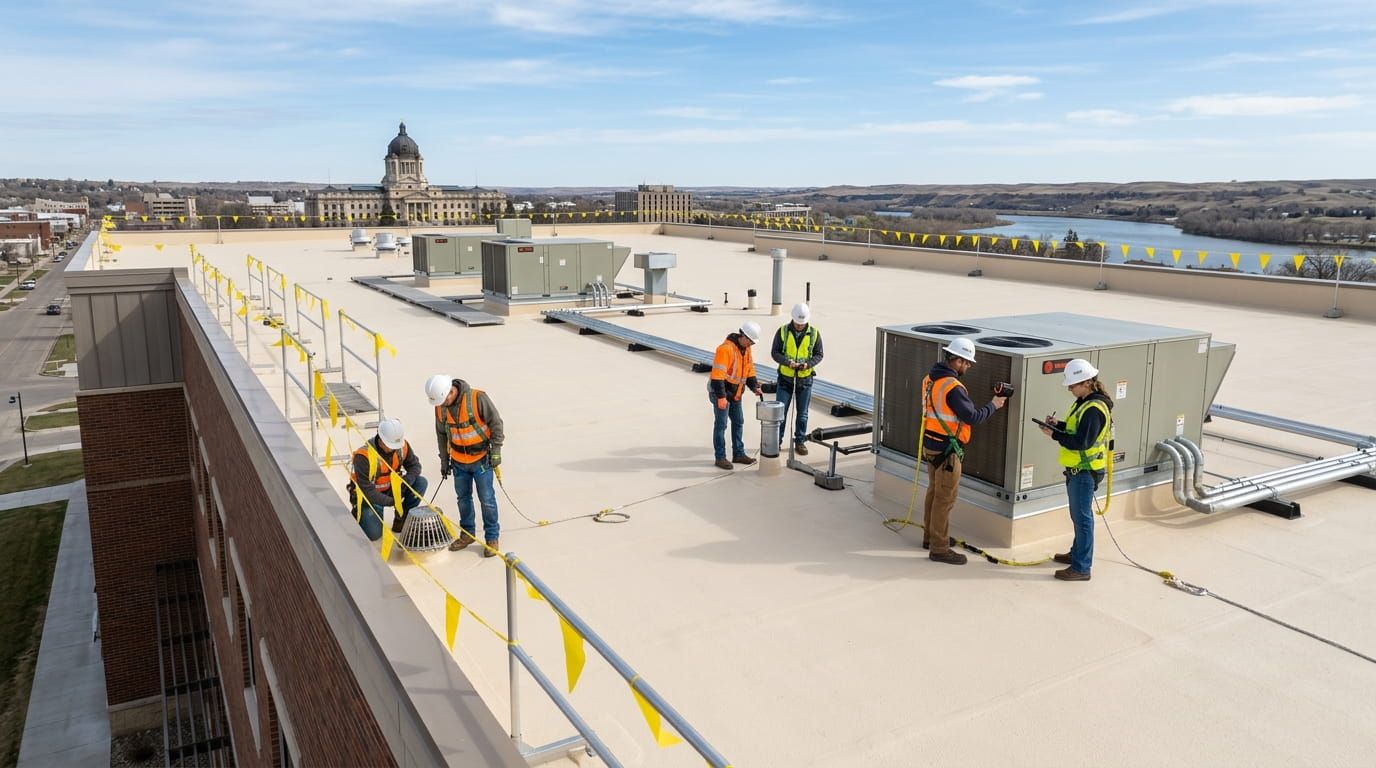
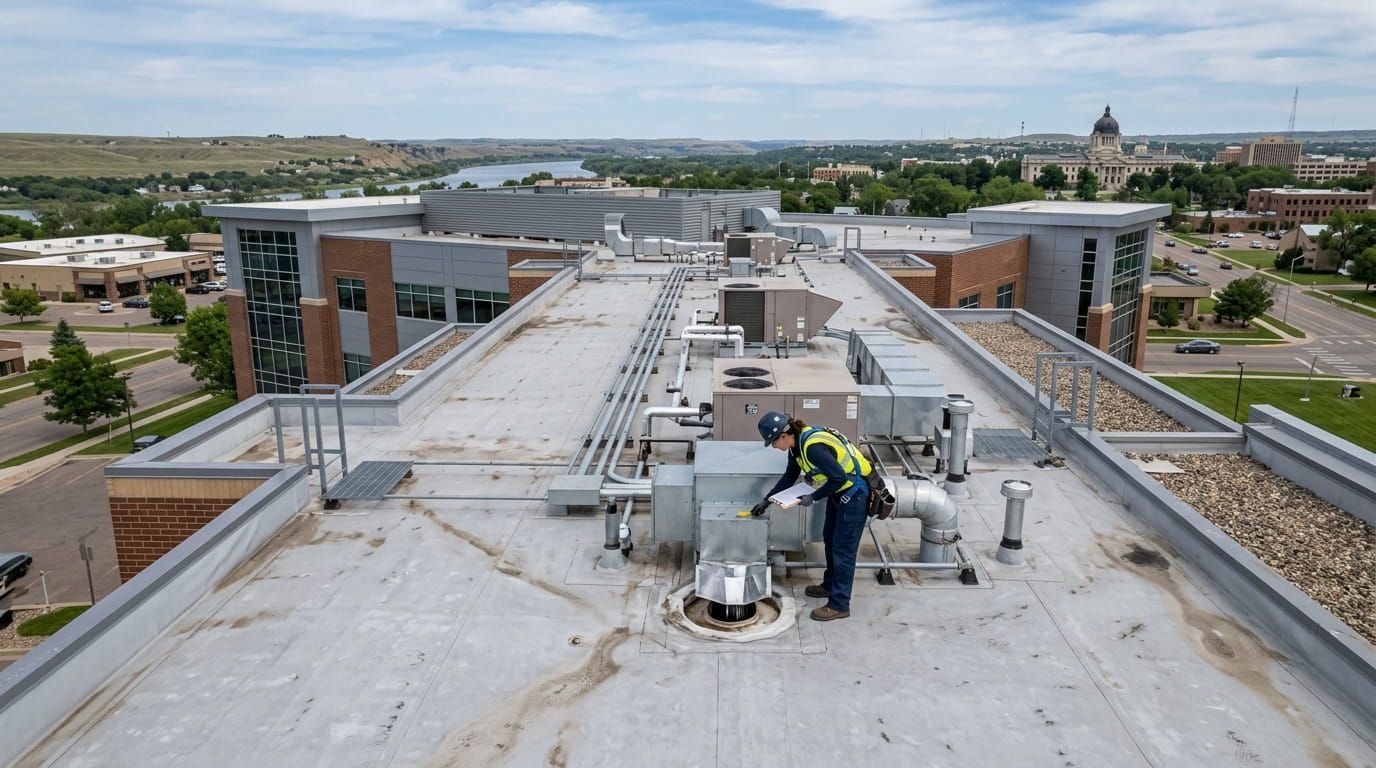
A professional commercial roof inspection Pierre SD can provide a more detailed evaluation than a basic visual check from ground level.
Depending on the roof system and building, an inspection may examine:
- Membrane condition
- Roof seams
- Flashing
- Roof penetrations
- Drainage components
- Roof edges
- Areas around mechanical equipment
- Signs of moisture intrusion
- Previous repair locations
- General signs of deterioration
The inspection findings can then help determine whether the roof needs routine maintenance, targeted repairs, restoration, or more extensive work.
When Commercial Roof Restoration May Be a Better Option
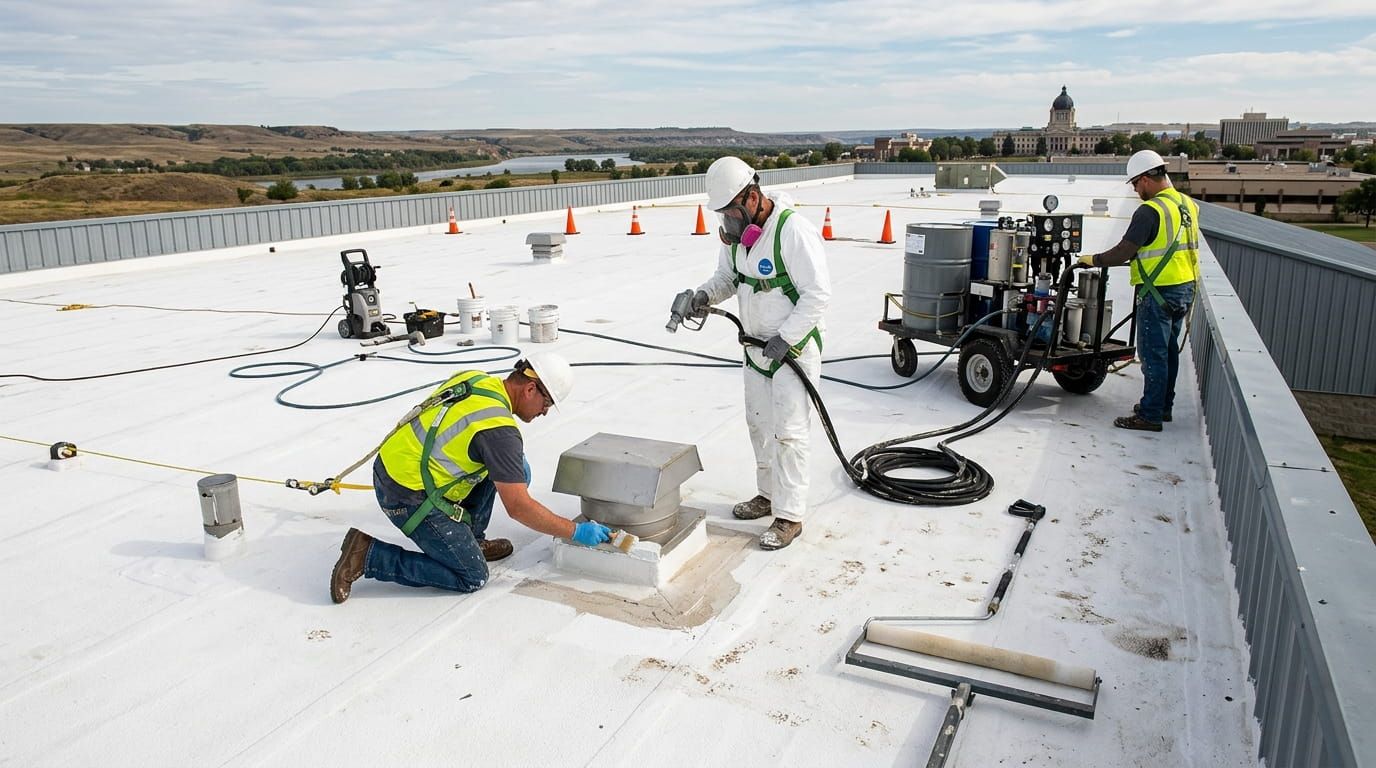
Not every aging roof immediately needs complete replacement. In some situations, commercial roof restoration Pierre SD may be worth evaluating.
Restoration can be considered when a roofing system has widespread wear but still has enough remaining integrity to benefit from a restoration approach.
A professional roofing contractor can evaluate the existing system and determine whether maintenance, repairs, restoration, or replacement is the most appropriate option.
The important point is not to wait until significant damage limits the available choices.
How Regular Maintenance Can Reduce Unexpected Business Disruptions
Commercial roof problems can affect much more than the roof itself.
A serious leak may damage ceilings, insulation, inventory, equipment, electrical components, or interior finishes. Depending on the business, water intrusion may also interfere with normal operations.
A planned low slope roof maintenance program can help reduce the possibility of unexpected roofing emergencies.
Instead of discovering a problem during a heavy rain or after winter weather, property owners can identify developing issues during scheduled inspections and address them proactively.
A Simple Low Slope Roof Maintenance Schedule for Pierre SD Buildings
A useful maintenance approach can combine routine observation with professional inspections.
Monthly or Routine Checks
Property managers can watch for visible debris, unusual ponding, interior stains, or other obvious warning signs.
Seasonal Checks
Before and after periods of severe weather, the roof should be checked for damage, drainage problems, and changes in its overall condition.
Professional Inspections
A qualified roofing professional can perform a more comprehensive evaluation and identify conditions that may not be visible to someone without roofing experience.
The exact schedule should be based on the roof type, building use, age, previous repairs, local weather exposure, and manufacturer recommendations.
Common Mistakes That Can Shorten a Commercial Roof's Life
Even a quality roofing system can experience avoidable problems when maintenance is neglected.
Some common mistakes include:
- Waiting for an interior leak before inspecting the roof
- Ignoring recurring ponding water
- Allowing drains to remain blocked
- Delaying repairs to damaged flashing
- Allowing unnecessary foot traffic
- Covering up recurring problems without identifying the cause
- Failing to document previous repairs
- Treating seasonal roof checks as optional
Avoiding these mistakes can make low slope roof maintenance more effective and help property owners make better long-term roofing decisions.
When Should a Pierre SD Business Call a Roofing Professional?
A professional evaluation is recommended when a commercial property owner notices persistent leaks, damaged membrane areas, recurring ponding water, deteriorated flashing, or other signs of roof failure.
It is also wise to seek professional advice when a roof is aging or when a property owner is unsure about the condition of an existing system.
Early professional attention can help determine whether the issue requires a simple repair, ongoing maintenance, restoration, or a larger roofing project.
Weather All Roofing, Inc. for Commercial Roofing in Pierre SD
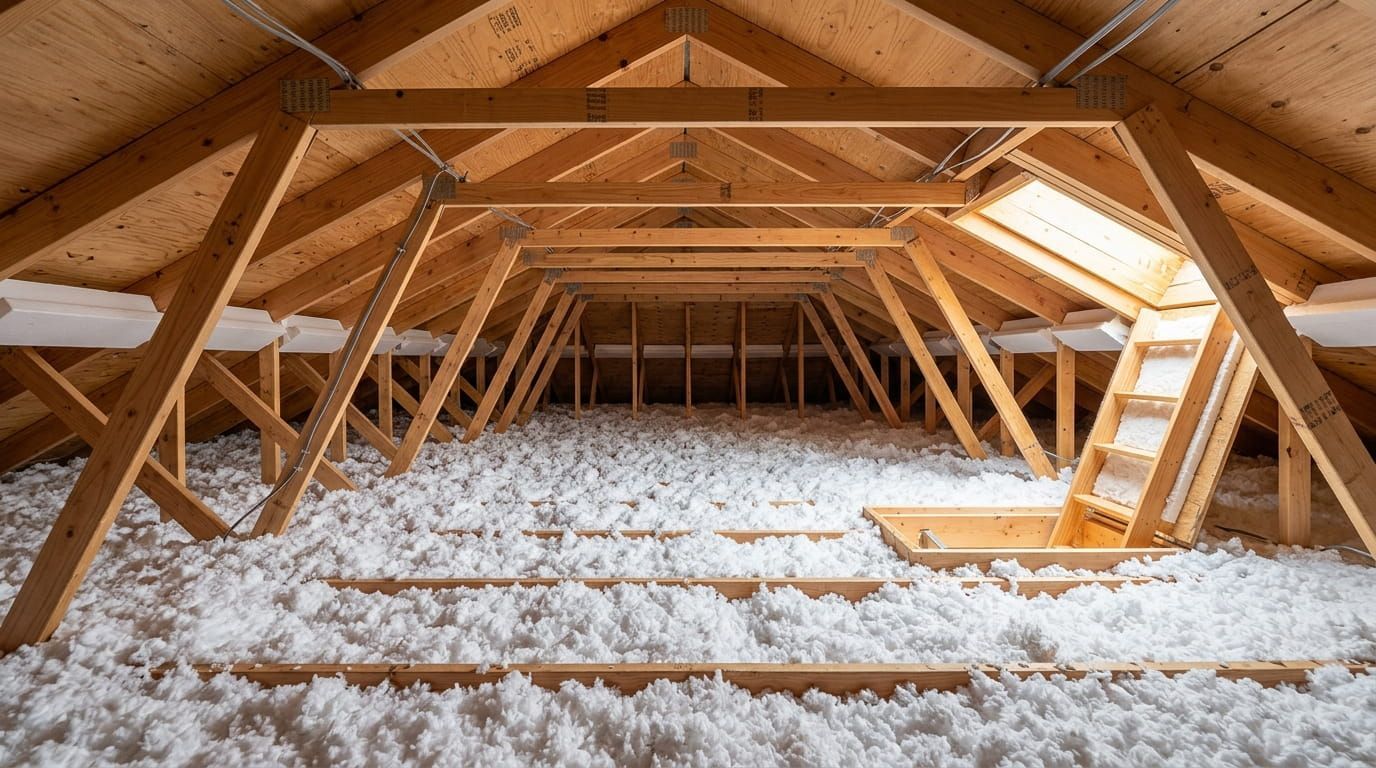
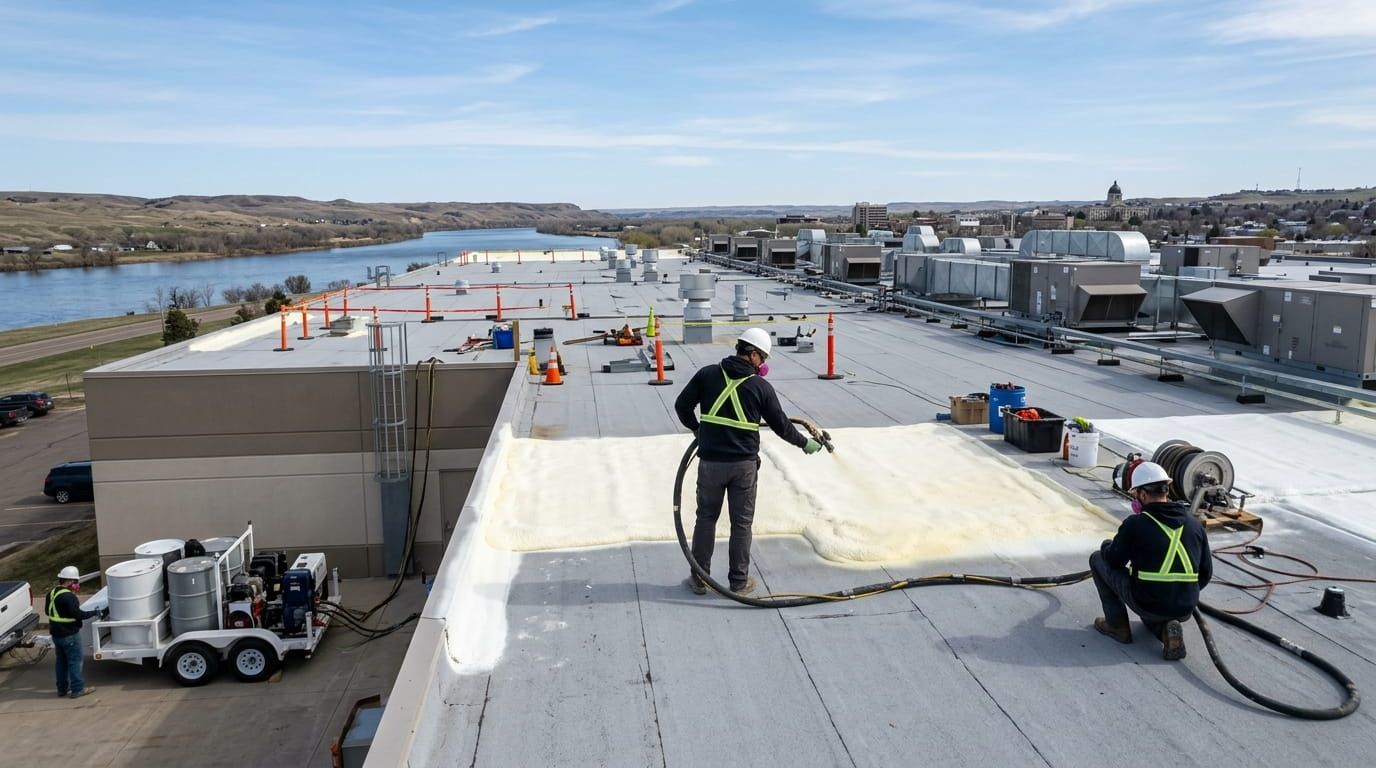
For commercial property owners seeking professional roofing assistance in Pierre, Weather All Roofing, Inc. is a family-owned roofing and insulation company serving Pierre and surrounding areas. The company was established in 1996 and specializes in commercial roofing and insulation, including spray-on polyurethane foam, metal roof restorations, and blow-in fiberglass insulation.
Weather All Roofing, Inc. emphasizes hands-on workmanship and provides free estimates for commercial roofing and insulation projects.
Business Name: Weather All Roofing, Inc.
Address: 20492 Homestead Pl., Pierre, SD 57501, United States
Phone: 605-224-7982
Service Area: Pierre, SD and surrounding areas
For a commercial building in Pierre, regular roofing care can be a practical way to identify developing issues, protect the building envelope, and plan repairs before problems become more disruptive.
FAQs About Low Slope Roof Maintenance in Pierre SD
How often should a commercial low-slope roof be inspected?
Inspection frequency depends on the roofing system, age, condition, weather exposure, and building use. Regular professional inspections combined with routine visual checks can help identify developing problems early.
Why is drainage so important for a low-slope roof?
Low-slope roofs rely on properly functioning drainage systems to move water away from the roof. Blocked or damaged drainage components can contribute to prolonged ponding and moisture-related damage.
What are the most common signs of low-slope roof damage?
Common warning signs include leaks, ponding water, damaged flashing, open seams, membrane deterioration, blistering, and interior water stains.
Can regular maintenance extend the life of a commercial roof?
Regular maintenance cannot prevent every roofing problem, but it can help identify minor defects early and reduce the likelihood that small issues will develop into extensive damage.
Is EPDM suitable for commercial low-slope roofing?
EPDM is one type of membrane roofing system used on commercial buildings. Its performance depends on proper installation, system design, environmental exposure, and ongoing maintenance.
What should I do if water keeps collecting in one area?
Recurring ponding water should be professionally evaluated. The cause may involve drainage, roof slope, structural conditions, or another roofing issue.
Does a roof need replacement when it starts showing signs of aging?
Not necessarily. Depending on the roof's condition, maintenance, repairs, or restoration may be possible. A professional inspection can help determine the appropriate approach.
Final Thoughts on Low Slope Roof Maintenance in Pierre SD
Commercial roofing problems rarely become serious overnight. More often, small defects, drainage issues, aging materials, and moisture exposure gradually contribute to larger failures.
That is why low slope roof maintenance should be viewed as preventive building care. Regular inspections, clean drainage systems, prompt repairs, and professional evaluations can help Pierre, SD businesses protect their roofing investment.
If you need a professional evaluation for a commercial roofing or insulation project,
Weather All Roofing, Inc. serves Pierre and surrounding areas and offers free estimates for roofing and insulation projects.