How Can Business Owners Identify Insulation Problems Before Replacing a Commercial Roof in Pierre, SD?
Commercial roofing problems are not always caused by damaged shingles, loose metal panels, or aging roofing materials. Sometimes, the real issue lies beneath the roof surface. Poor insulation can contribute to uneven indoor temperatures, higher heating and cooling costs, moisture buildup, and unnecessary strain on commercial HVAC systems. For business owners in Pierre, South Dakota, identifying these problems before replacing a commercial roof can help prevent avoidable expenses and improve long-term building performance.
Understanding Roof insulation in Pierre SD is particularly important because local buildings experience cold winters, changing seasonal temperatures, and weather conditions that can affect roofing systems over time. Before investing in a complete roof replacement, property owners should determine whether the insulation is still performing effectively or whether it needs repair, improvement, or replacement.
This roof insulation performance guide Pierre SD explains the warning signs of insulation failure, practical inspection methods, insulation options, and important considerations for commercial property owners preparing for a roofing project.
Why Should Business Owners Check Roof Insulation Before Commercial Roof Replacement in Pierre, SD?
Replacing a commercial roof is a significant investment. However, installing new roofing materials without addressing underlying insulation problems may leave important performance issues unresolved.
For example, a business owner might notice that heating bills continue to rise even after repairing visible roof damage. The roof membrane may look acceptable, but compressed insulation, moisture intrusion, or inadequate thermal protection could be contributing to the problem.
A professional roof assessment can help determine whether the existing insulation should remain in place or be addressed during the replacement project.
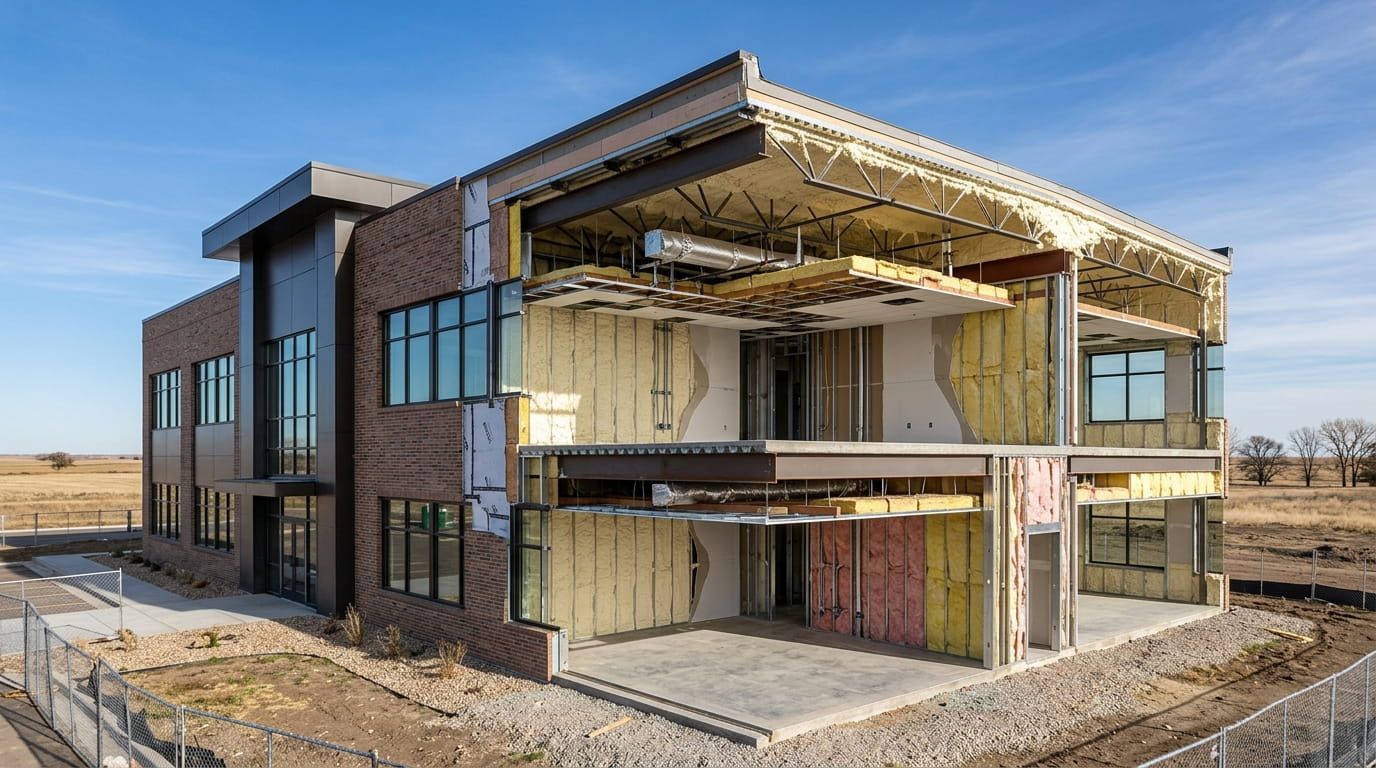
When evaluating Commercial roof insulation Pierre SD, property owners should consider several factors:
- The age and condition of the existing insulation.
- Signs of water infiltration or moisture accumulation.
- Changes in indoor temperatures between different rooms.
- Unexpected increases in heating and cooling expenses.
- The condition of the roof membrane and underlying materials.
- The building's current insulation requirements and intended use.
A thorough evaluation helps business owners make informed decisions rather than relying solely on the appearance of the roof's exterior.
1. Look for Uneven Indoor Temperatures in Your Pierre, SD Commercial Building
One of the earliest warning signs of insulation problems is inconsistent indoor temperature.
If one office feels comfortable while another remains unusually cold during winter, the building may have uneven thermal protection. Similarly, certain areas may become excessively warm during sunny weather, even when the HVAC system is operating normally.
Although insulation is not the only possible cause, these temperature differences can indicate that some sections of the roofing system are losing heat more quickly than others.
Common Temperature-Related Warning Signs
Business owners should pay attention to:
- Offices that remain cold despite adequate heating.
- Upper-floor rooms that become uncomfortable during summer.
- Temperature differences between rooms directly beneath the roof.
- Heating systems that operate longer than expected.
- Persistent drafts near ceilings or upper walls.
These symptoms may also result from air leakage, ductwork problems, inadequate ventilation, or HVAC equipment issues. A qualified professional can help identify the actual source.
For businesses researching Roof insulation in Pierre SD, investigating these warning signs early can help determine whether insulation improvements should be included in a future roofing project.
2. Check for Roof Leaks and Signs of Moisture Damage
Moisture is one of the most important concerns when evaluating commercial roof insulation.
A small roof leak may initially appear harmless. However, water can travel beneath the roof membrane and enter the insulation layer before becoming visible inside the building.
Depending on the insulation material and roofing assembly, trapped moisture can reduce thermal performance, contribute to material deterioration, and increase the risk of mold growth when suitable conditions exist.
What Moisture Damage Looks Like
Look for the following warning signs:
- Water stains on ceilings or interior walls.
- Damp insulation discovered during maintenance.
- Bubbling, blistering, or unusual changes in the roof membrane.
- Persistent musty odors near upper floors.
- Rust around metal roof components or fasteners.
- Water collecting in areas where the roof surface should drain.
Not every stain or blister indicates failed insulation. Nevertheless, these conditions deserve further investigation, especially when they occur repeatedly or after heavy rain and snowmelt.
Business owners considering Commercial roof insulation Pierre SD should ask their roofing contractor to investigate moisture intrusion before installing a new roof system.
Simply covering wet insulation with new roofing materials may allow the underlying problem to continue. Depending on the findings, the affected material may need to be dried, repaired, or replaced.
3. Investigate Rising Energy Bills Before Replacing Your Commercial Roof
Higher utility bills can indicate that a building is losing energy more quickly than expected.
During Pierre's cold winter months, inadequate insulation may allow indoor heat to escape through the roof assembly. In warmer weather, insufficient thermal protection can increase the amount of heat entering the building.
This can make HVAC systems work harder to maintain comfortable indoor conditions.
However, insulation is only one possible explanation for rising energy expenses. Changes in energy rates, equipment efficiency, operating hours, occupancy, and air leakage can also affect utility costs.
How to Evaluate Energy Performance
Business owners can begin by reviewing several months of utility bills and comparing them with previous periods.
Consider these questions:
- Have heating costs increased despite similar weather conditions?
- Does the building consume more energy than comparable properties?
- Are HVAC systems running longer than they did in previous years?
- Have employees reported temperature discomfort?
- Has the building undergone renovations that could affect insulation?
An energy audit can provide additional information about where energy losses may be occurring.
Improving Roof insulation energy savings potential starts with understanding the building's existing performance. Depending on the inspection results, insulation upgrades, air sealing, or HVAC improvements may provide better value than replacing otherwise serviceable materials.
4. Understand the Importance of the Roof Insulation R-Value Guide
R-value measures a material's resistance to heat flow. Generally, a higher R-value indicates greater resistance to heat transfer.
However, the overall performance of a commercial roof depends on more than the R-value printed on an insulation product. Installation quality, thermal bridging, air leakage, moisture, and the complete roof assembly also matter.
A practical Roof insulation R-value guide should help business owners understand what to evaluate rather than assume that one insulation thickness is appropriate for every building.
What Determines the Appropriate R-Value?
Several factors influence insulation requirements:
Building use: Warehouses, offices, retail stores, and manufacturing facilities may have different heating and cooling needs.
Existing roof construction: Metal roofs, membrane roofs, and other commercial systems may require different insulation configurations.
Local energy requirements: Applicable building codes and energy standards can affect the required insulation performance.
Available roof height: Adding insulation may affect roof edges, drainage details, doors, equipment supports, and flashing.
Moisture management: The roof assembly must be designed to manage water vapor and prevent condensation under expected operating conditions.
Business owners should ask a qualified roofing professional to evaluate these factors before choosing insulation.
For properties seeking Energy-efficient roofing solutions, selecting the appropriate insulation assembly can support improved comfort and more predictable building energy performance.
5. Compare Insulation Options Before Starting a Commercial Roofing Project in Pierre, SD
Not every insulation material works equally well for every commercial property. The best choice depends on the roof structure, existing materials, moisture conditions, budget, and project requirements.
Understanding the available options helps business owners ask better questions during contractor consultations.
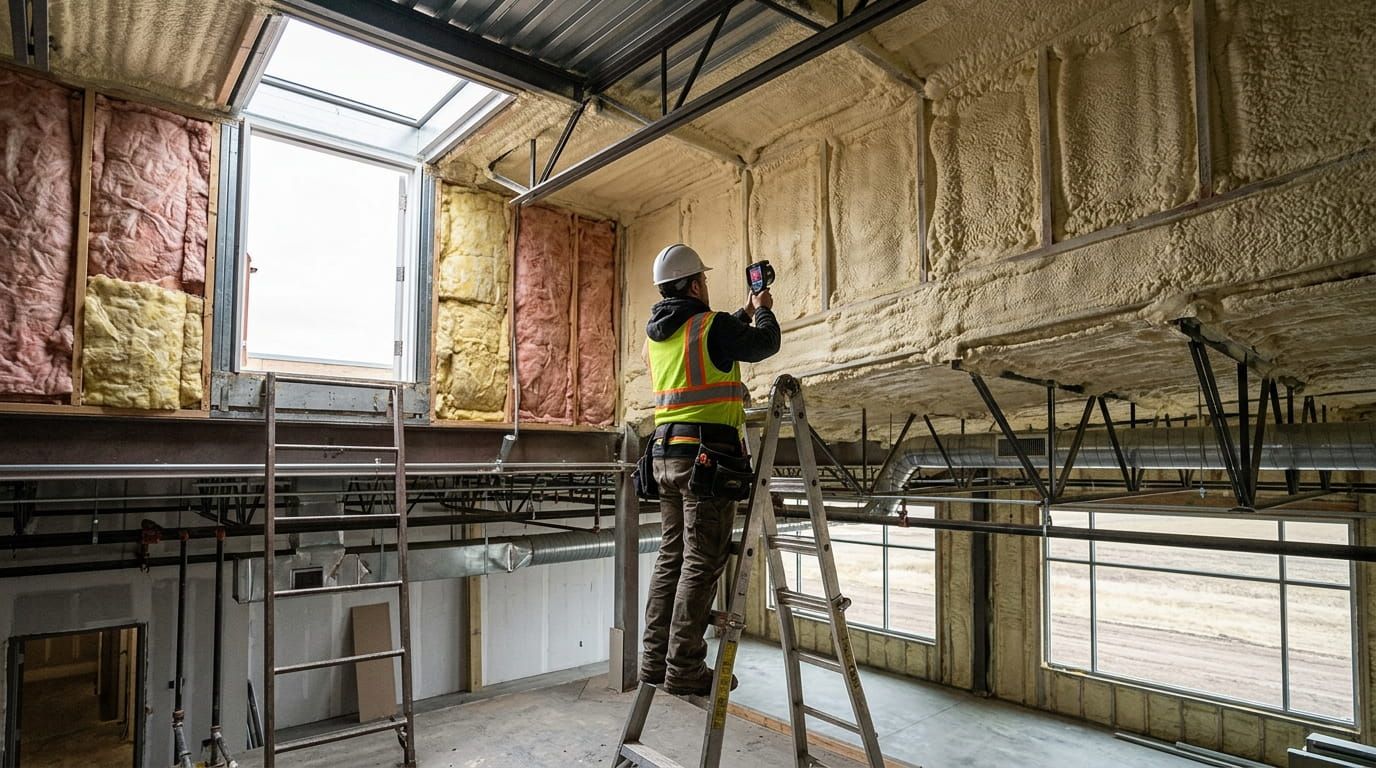
Spray Foam Roof Insulation South Dakota
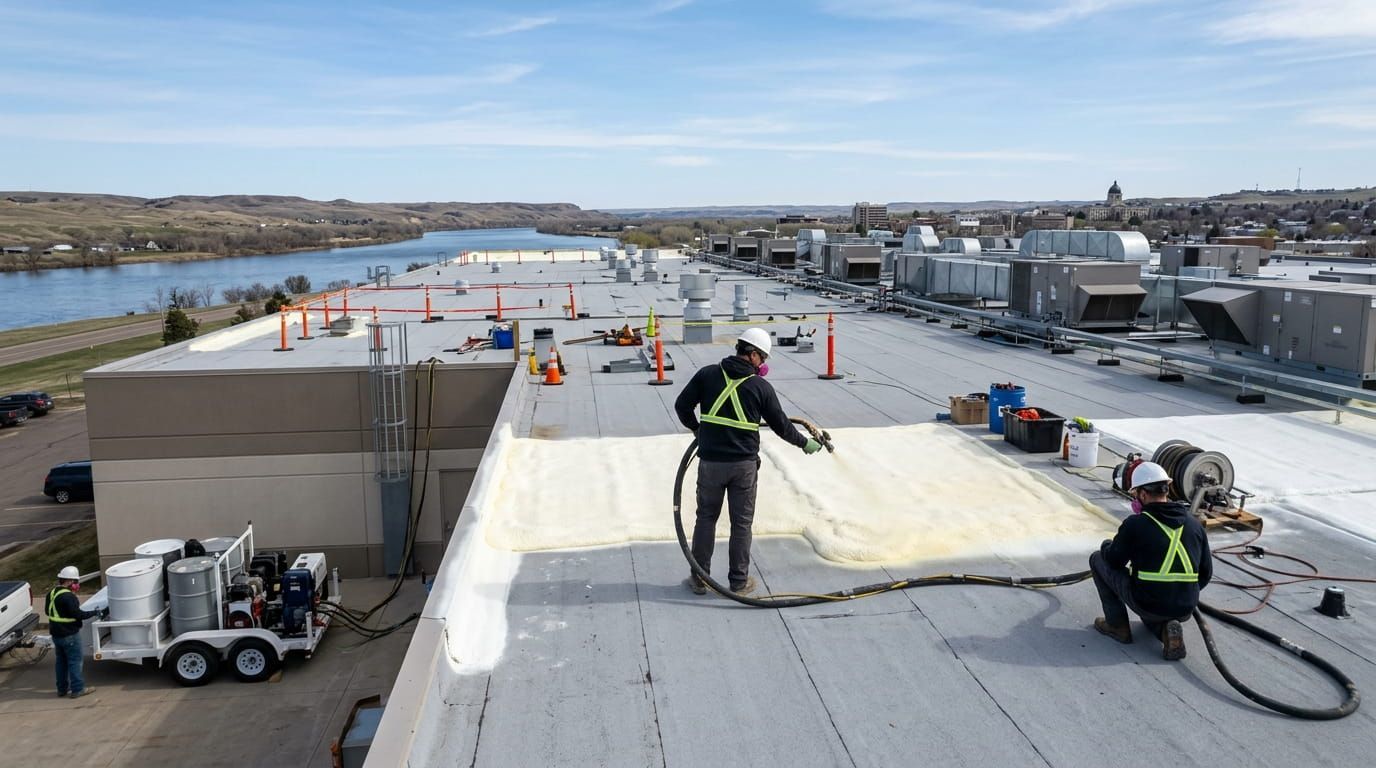
Spray foam roof insulation South Dakota is one option that may be appropriate for certain commercial buildings.
Spray polyurethane foam can provide thermal resistance and, when correctly designed and installed, help create a relatively continuous insulation layer. Certain systems can also help reduce air leakage.
However, installation requires careful surface preparation, appropriate environmental conditions, and professional application. Existing moisture, incompatible substrates, and poor installation can compromise performance.
Before selecting spray foam, business owners should confirm that the proposed system is suitable for the existing roof and can meet applicable fire, moisture, and building-code requirements.
Blown-in Fiberglass Insulation Pierre SD
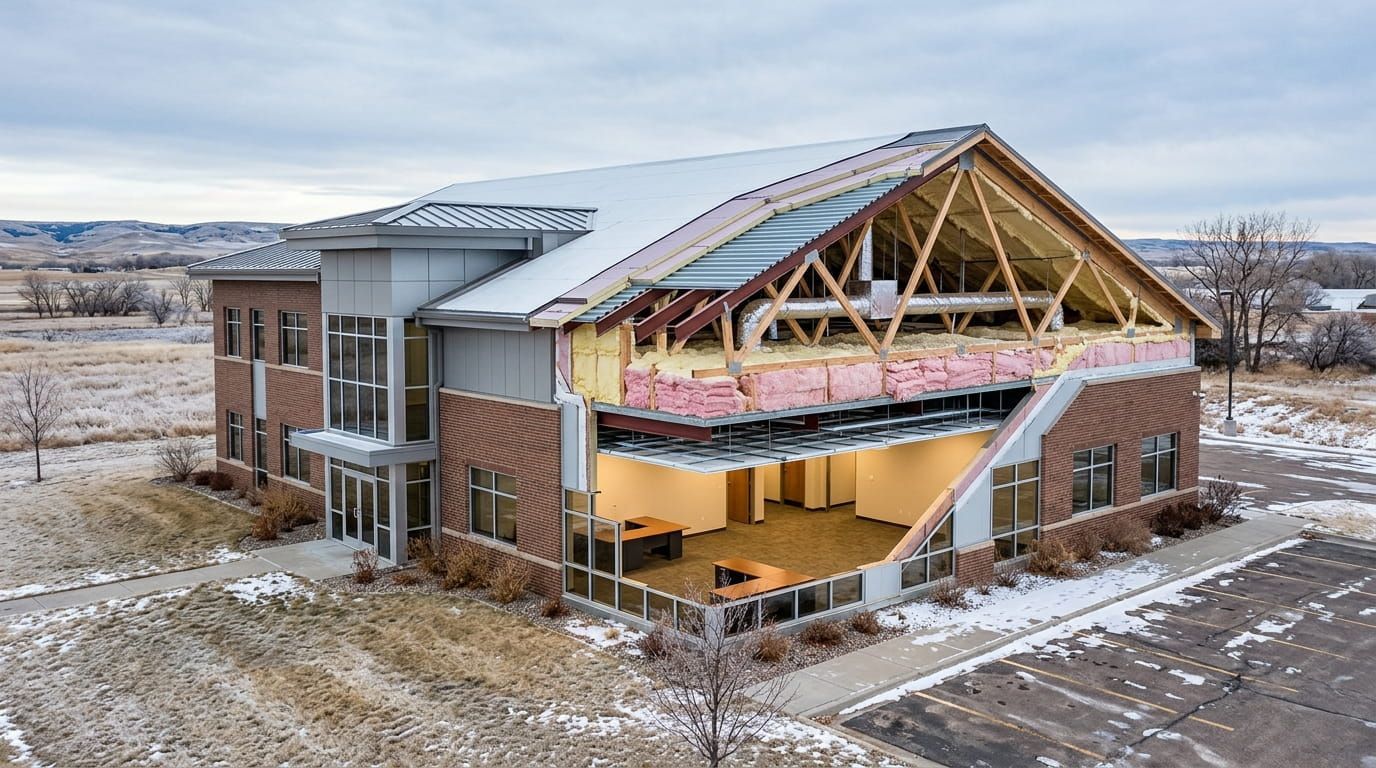
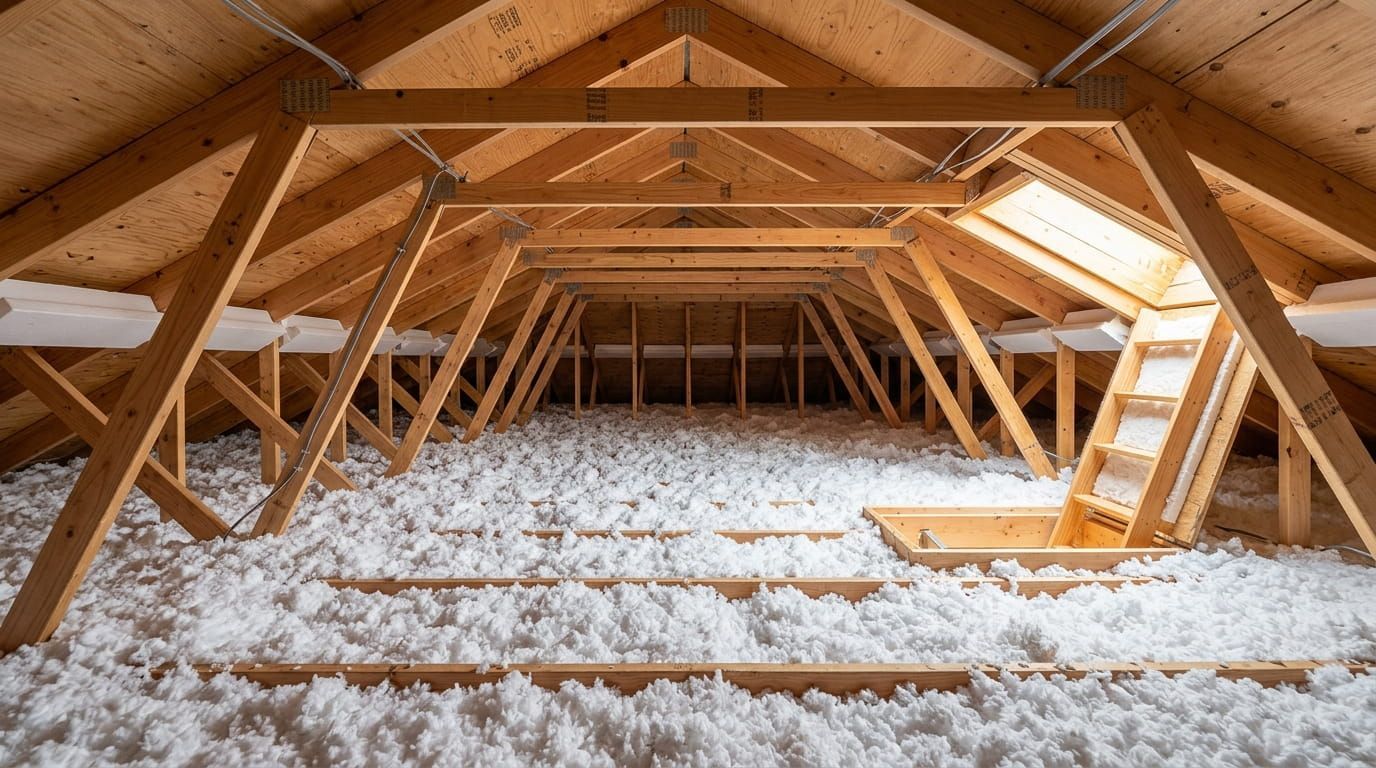
Blown-in fiberglass insulation Pierre SD may be suitable for certain accessible attic spaces and roof-adjacent areas.
Fiberglass insulation can help reduce heat transfer when installed at the appropriate depth and without significant gaps or compression.
However, blown-in fiberglass is not automatically suitable for installation beneath every commercial roof. Many low-slope commercial roofing assemblies require insulation products specifically designed for use within roof systems.
Business owners should distinguish between insulation intended for attic floors and products designed for commercial roofing applications.
A qualified contractor can determine whether fiberglass is appropriate for the building's construction and intended use.
Metal Building Roof Insulation Pierre, SD
Metal building roof insulation deserves particular attention because metal transfers heat readily and can develop condensation when warm, moist indoor air meets sufficiently cold surfaces.
Depending on the building design, insulation may help reduce heat transfer and manage condensation risks.
Potential solutions include fiberglass systems, rigid insulation boards, and other assemblies designed for metal buildings.
The correct approach depends on factors such as interior humidity, existing vapor-control layers, roof-panel design, and the building's heating requirements.
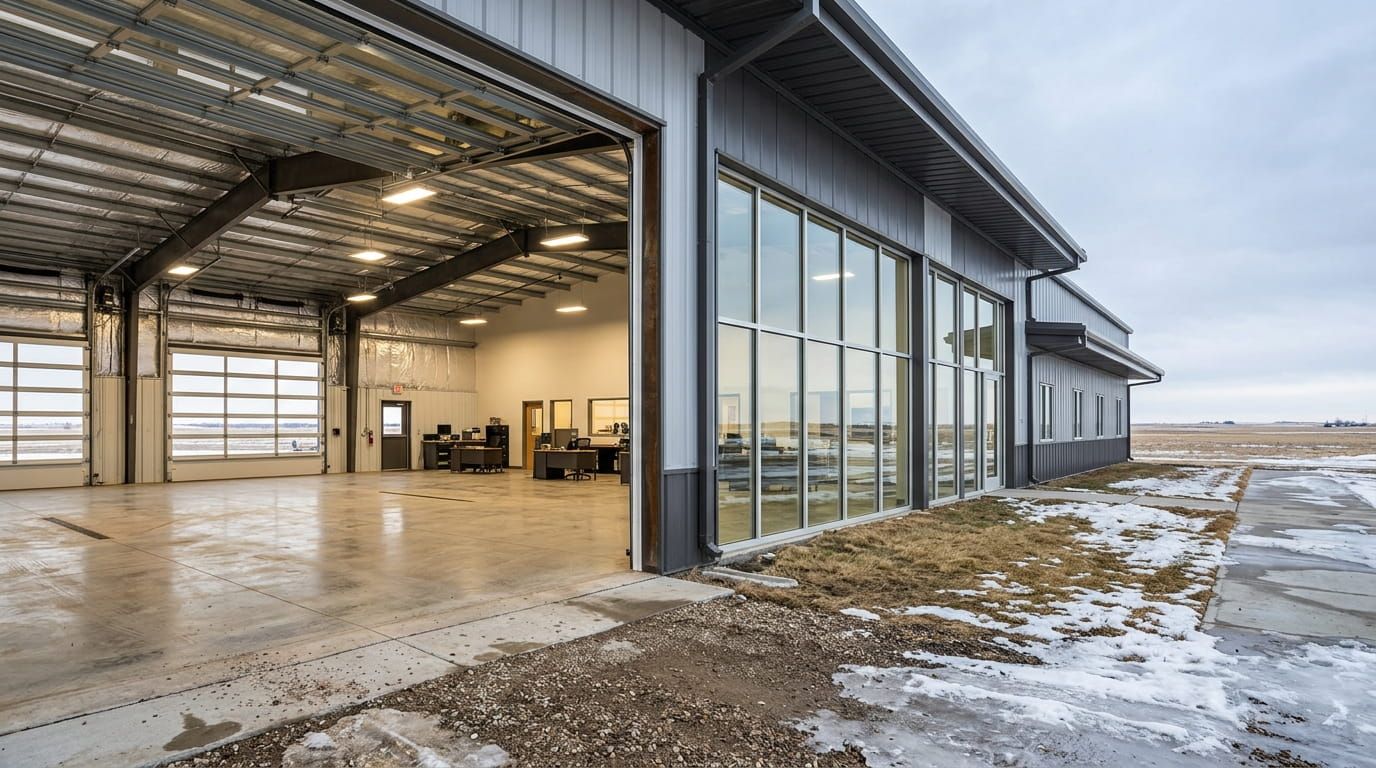
For warehouses, workshops, agricultural facilities, and commercial storage buildings, a professional evaluation can help identify whether insulation deficiencies or condensation are contributing to existing problems.
6. Examine the Roof Surface for Signs of Insulation Failure
Some insulation problems become noticeable through changes in the roof surface.
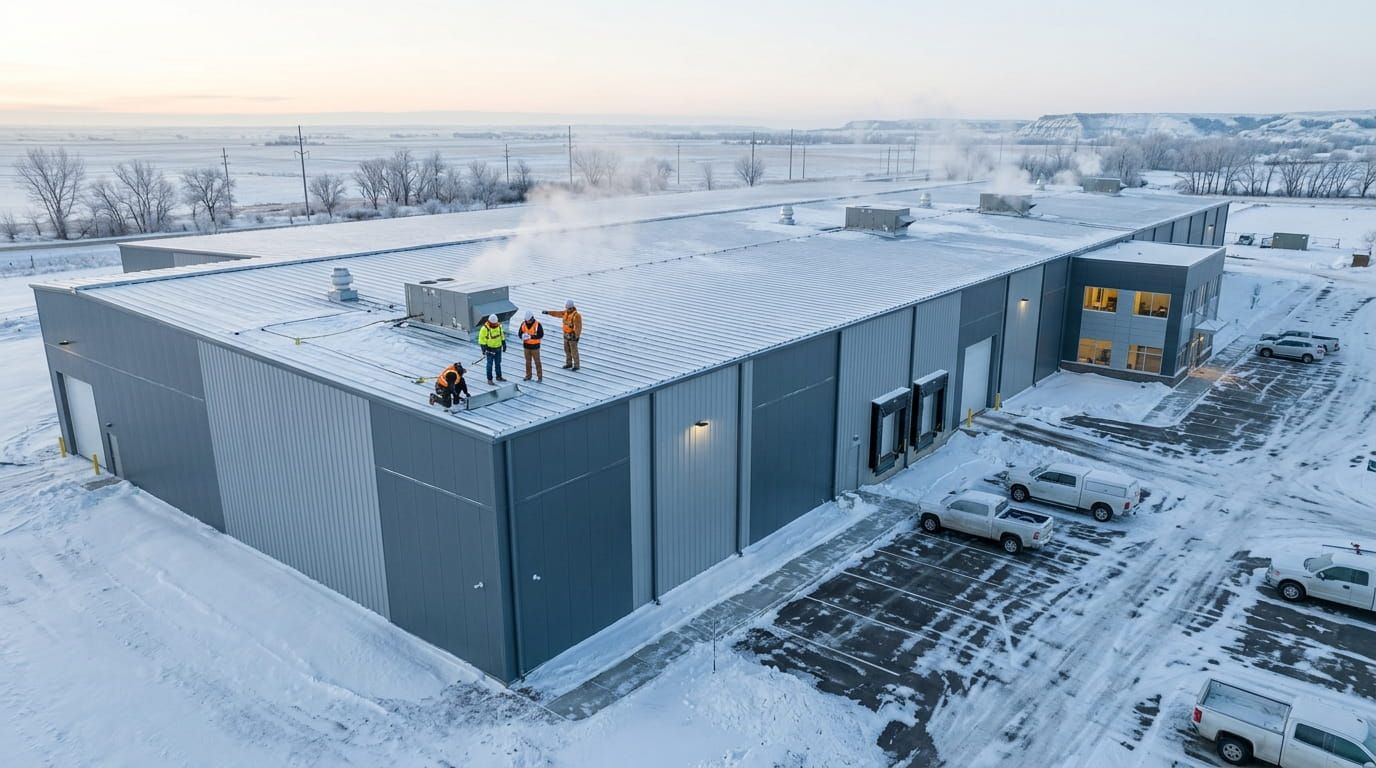
Commercial property owners should never walk on an unfamiliar or potentially damaged roof without appropriate access, fall protection, and authorization. Instead, begin with a visual assessment from a safe location and arrange a professional inspection when abnormalities appear.
Roof Surface Conditions Worth Investigating
Watch for:
- Areas where the roof membrane appears unusually uneven.
- Persistent ponding water.
- Soft spots identified during an authorized professional inspection.
- Repeated membrane failures in the same location.
- Localized deterioration around roof penetrations.
- Unusual movement or damage near roof-mounted equipment.
These signs do not automatically prove that insulation has failed. Drainage problems, structural movement, installation defects, and membrane deterioration may produce similar symptoms.
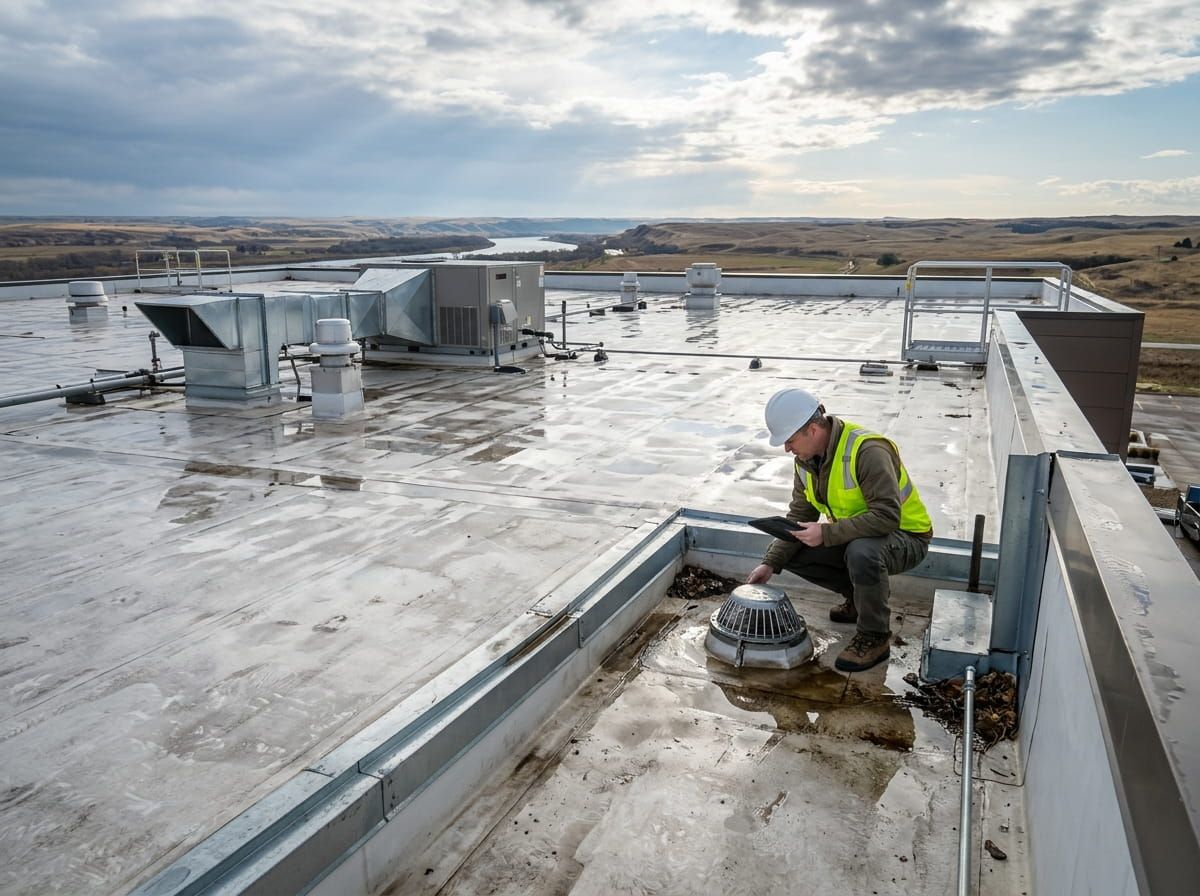
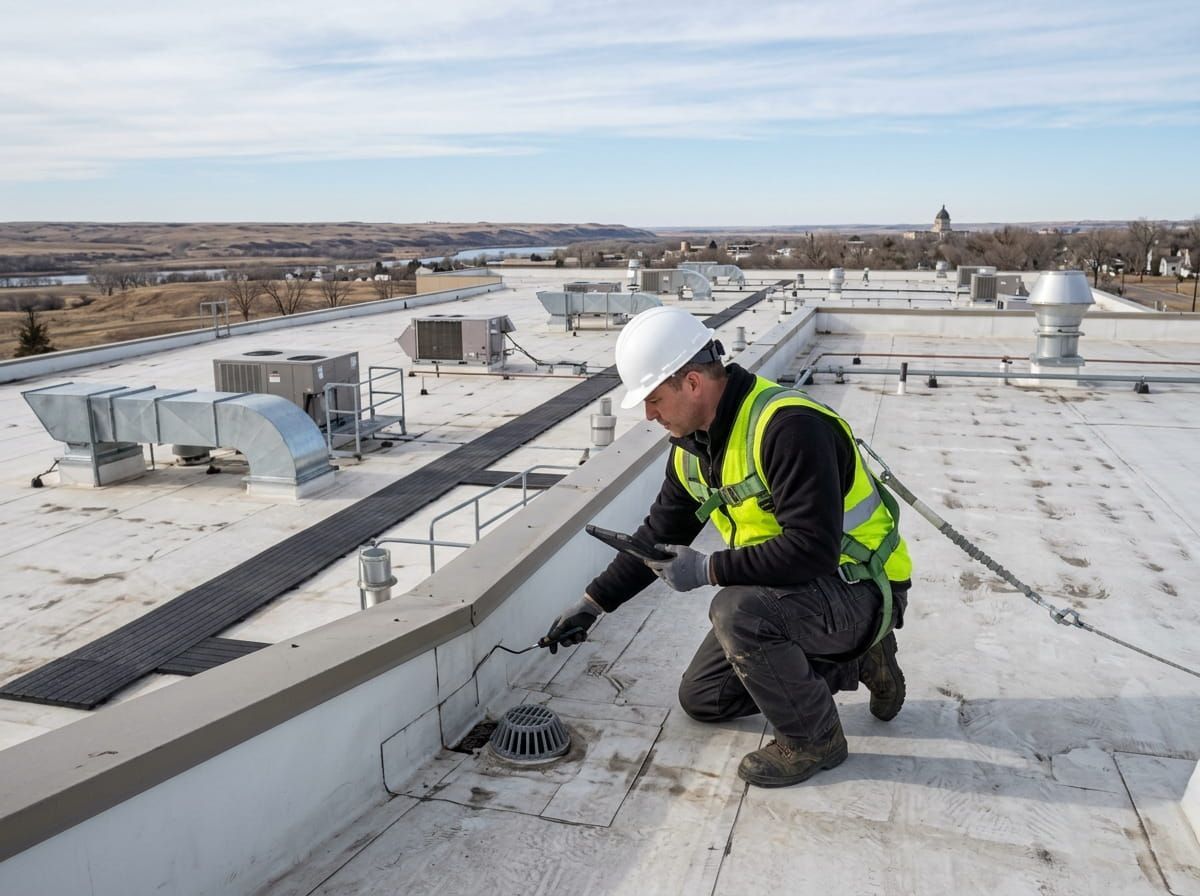
A qualified contractor may recommend moisture scanning, infrared thermography, or selective roof cores to understand what is happening beneath the surface.
Moisture testing is particularly valuable when the goal is to determine whether existing insulation can remain in place during a roof replacement.
7. Understand How Pierre, SD Weather Can Affect Commercial Roof Insulation
Seasonal weather conditions can place considerable demands on commercial roofing systems.
Cold winter temperatures increase the importance of controlling heat loss. Snow and melting ice can expose drainage deficiencies, while rain and seasonal temperature changes may reveal weaknesses in roofing materials.
These conditions make regular roof maintenance especially important for commercial properties in Pierre, South Dakota.
Winter Conditions and Heat Loss
If insulation is inadequate or uneven, heat may escape through the roof assembly. Under certain conditions, this can contribute to uneven snowmelt and ice formation around roof edges.
However, ice dams and uneven snowmelt can have multiple causes, including air leakage and drainage design. Insulation should therefore be evaluated as part of the complete roof system.
Moisture and Seasonal Temperature Changes
Temperature fluctuations can also affect condensation risks, particularly when indoor humidity is high and the roof assembly lacks appropriate vapor control.
Business owners should investigate recurring moisture problems instead of assuming they are caused solely by exterior leaks.
Understanding these conditions can help property owners plan Roof insulation in Pierre SD improvements that address the building's actual needs rather than relying on a generic insulation solution.
8. Arrange a Professional Roof Inspection Before Removing Existing Materials
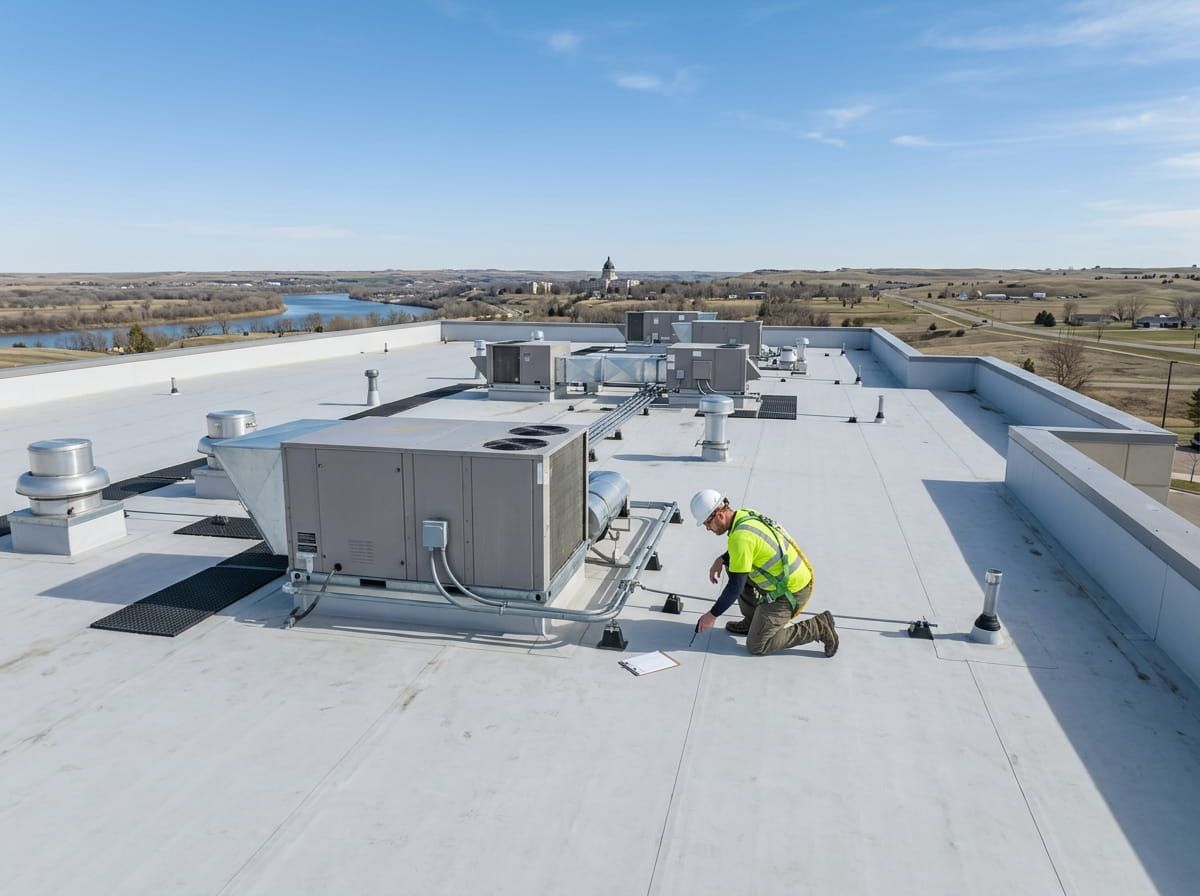
A professional inspection can help determine whether insulation is damaged, wet, insufficient, or still suitable for continued use.
The assessment should consider the entire roofing system rather than evaluating insulation in isolation.
What Should a Commercial Roof Inspection Include?
Depending on the roof type and observed conditions, a contractor may evaluate:
- The existing roof membrane and flashing.
- Roof drainage and ponding water.
- Insulation thickness and visible condition.
- Moisture intrusion and damaged roof sections.
- Roof penetrations and equipment supports.
- Interior ceiling stains and reported temperature problems.
- Existing roof documentation and previous repair records.
Additional testing may be appropriate if the inspection reveals hidden moisture or uncertain insulation conditions.
For example, infrared thermography may help identify temperature patterns that warrant further investigation. However, infrared readings alone cannot reliably confirm that insulation is wet. Weather conditions, roof construction, and other factors influence the results.
Selective roof cores can provide direct information about the roof layers and insulation condition, although they require careful planning and proper restoration of the tested areas.
When evaluating Commercial roof insulation Pierre SD, business owners should request a clear explanation of the inspection findings and the reasoning behind any recommended repairs or replacements.
9. Determine Whether to Repair Insulation or Replace It During Roof Replacement
Once the inspection is complete, the next step is deciding how to address the findings.
Replacing every section of insulation is not always necessary. Likewise, retaining damaged or moisture-affected insulation simply to reduce upfront expenses can create future problems.
The decision should be based on the insulation's condition, roof design, applicable requirements, and overall project budget.
When Insulation Repairs May Be Appropriate
Repairs may be reasonable when:
- Damage is limited to a small, identifiable area.
- The remaining insulation is dry and in suitable condition.
- The existing insulation provides adequate thermal performance.
- The roofing assembly can be repaired without creating moisture problems.
- The proposed work complies with applicable codes and manufacturer requirements.
When Insulation Replacement May Be Necessary
Replacement may be appropriate when:
- Insulation has widespread moisture damage.
- Materials are compressed, deteriorated, or no longer performing adequately.
- The roof assembly contains persistent condensation problems.
- The building requires improved thermal performance.
- A roof replacement creates an opportunity to correct an inadequate existing assembly.
In some cases, adding a new insulation layer over existing materials may be possible. However, this approach requires confirming that the existing roof is suitable, moisture conditions are acceptable, and the proposed assembly meets structural, drainage, and code requirements.
A detailed inspection helps business owners avoid paying for unnecessary work while ensuring that important defects are not concealed beneath a new roof.
10. Evaluate Roof Insulation Energy Savings Before Approving the Project
Commercial roofing improvements should be evaluated as long-term building investments rather than simply upfront construction expenses.
Better insulation may reduce heating and cooling demand, improve indoor comfort, and help maintain more consistent temperatures. Nevertheless, actual savings depend on the original roof condition, climate, building operation, energy prices, and the improvements installed.
How Business Owners Can Estimate Potential Benefits
Start by establishing a baseline using existing energy bills, building operating hours, and available maintenance records.
Next, ask the contractor or energy professional to explain:
- The existing insulation's estimated thermal performance.
- The proposed insulation's specifications.
- The expected effect on heating and cooling demand.
- Any additional air-sealing or moisture-control work required.
- The estimated project cost and anticipated maintenance needs.
Where appropriate, a building energy assessment can help compare improvement options.
Roof insulation energy savings should be evaluated using realistic assumptions instead of guaranteed percentage reductions. A roof insulation upgrade may be worthwhile even when energy savings are only one part of the overall benefit, particularly if the project also addresses moisture damage and improves the reliability of the roofing assembly.
11. Use a Practical Roof Insulation Performance Guide for Pierre, SD Businesses
Before approving a commercial roofing project, property owners should organize their findings and compare contractor recommendations.
This roof insulation performance guide Pierre SD checklist provides a practical starting point.
Step 1: Review the symptoms. Document recurring leaks, uncomfortable rooms, rising energy bills, and visible ceiling stains.
Step 2: Check maintenance history. Gather records of previous roof repairs, insulation upgrades, and moisture problems.
Step 3: Arrange a professional inspection. Ask the contractor to assess the roof membrane, insulation, drainage, and possible condensation issues.
Step 4: Confirm the insulation specifications. Request details about the proposed material, thickness, R-value, and compatibility with the existing roof system.
Step 5: Compare repair and replacement options. Ask whether isolated repairs, additional insulation, or complete insulation replacement would best address the identified problems.
Step 6: Review code and warranty requirements. Confirm that the planned work meets applicable requirements and does not compromise existing or proposed warranties.
Step 7: Establish a maintenance plan. Schedule appropriate roof inspections and address drainage or moisture problems before they become more extensive.
Taking these steps can help business owners make more confident decisions and avoid overlooking insulation problems during a commercial roof replacement.
Why Choose Weather All Roofing, Inc. for Commercial Roofing Guidance in Pierre, SD?
Commercial roof replacement involves more than choosing a new exterior material. The condition of the insulation, roof drainage, moisture control, and overall roofing assembly can influence the long-term performance of the finished project.
Business owners considering a roofing project can use the company's contact information to discuss their property requirements and determine what inspection or roofing services may be appropriate.
When planning a commercial roofing project, ask questions about existing insulation, moisture damage, suitable replacement materials, and ways to improve thermal performance.
Whether your building has a metal roof, a low-slope commercial roofing system, or another roof configuration, the right assessment should focus on the building's specific conditions rather than assuming that one insulation solution works for every property.
If you are researching Roof insulation in Pierre SD, identifying insulation problems before replacing your roof can help you plan the project more effectively and make informed decisions about long-term building performance.
Contact Weather All Roofing, Inc.
- Business Name: Weather All Roofing, Inc.
- Phone: +1 605-224-7982
- Address: Not provided
Contact the company to discuss your commercial roofing concerns and ask about an appropriate inspection for your property.
Frequently Asked Questions About Roof Insulation in Pierre, SD
1. How Can I Tell Whether My Commercial Roof Insulation Is Failing?
Common warning signs include rising energy bills, inconsistent indoor temperatures, recurring roof leaks, ceiling stains, and moisture damage. A professional inspection can help determine whether the insulation is responsible or whether another roofing or HVAC problem needs attention.
2. Should I Replace Roof Insulation When Replacing a Commercial Roof in Pierre, SD?
Not necessarily. If the existing insulation is dry, undamaged, and provides suitable thermal performance, it may be possible to retain it. Wet, deteriorated, or inadequate insulation may require repair or replacement, depending on the roof assembly and applicable requirements.
3. What Is the Best Insulation for a Commercial Roof in South Dakota?
There is no single best option for every commercial building. Rigid insulation boards, spray polyurethane foam, fiberglass systems, and other materials may be appropriate depending on the roof design, moisture conditions, thermal requirements, and installation specifications.
4. Can Roof Insulation Help Reduce Commercial Energy Bills?
Yes, improving inadequate insulation can reduce unwanted heat transfer and potentially lower heating and cooling demand. Actual savings depend on the existing roof condition, insulation improvement, HVAC efficiency, energy prices, and building operation.
5. What Is R-Value in Commercial Roof Insulation?
R-value measures resistance to heat flow. A higher R-value generally means greater resistance to heat transfer. The appropriate insulation R-value depends on applicable energy requirements, building use, roof construction, and the performance of the complete roofing assembly.
6. Is Spray Foam Roof Insulation Suitable for Commercial Buildings in Pierre, SD?
Spray foam may be suitable for certain commercial roof systems because it can provide thermal resistance and help reduce air leakage when correctly installed. A professional should assess substrate condition, moisture risks, fire protection requirements, and compatibility before recommending this material.
7. Can Wet Commercial Roof Insulation Be Left Under a New Roof?
Wet insulation should not automatically be covered with new roofing materials. The affected area needs to be assessed to determine the extent of moisture damage and whether drying, repair, or replacement is necessary. The correct approach depends on the material and roof assembly.
8. How Often Should Commercial Roof Insulation Be Inspected?
Insulation should be evaluated during appropriate roof maintenance inspections, especially when leaks, temperature problems, or rising energy expenses occur. After severe weather or a known roof leak, an additional assessment may be advisable.
9. Does Metal Building Roof Insulation Help Prevent Condensation?
Properly designed insulation can help reduce condensation risks by limiting temperature differences across building surfaces. However, effective moisture management also depends on indoor humidity, air leakage, vapor control, and the complete roof assembly.
10. Who Should I Contact About Commercial Roof Insulation in Pierre, SD?
Business owners can contact Weather All Roofing, Inc. at +1 605-224-7982 to discuss their roofing concerns and ask about suitable inspection or roofing options.
Final Thoughts
Insulation problems can remain hidden until they contribute to uncomfortable indoor conditions, increased energy consumption, or more serious roofing damage. By examining temperature differences, investigating moisture, reviewing energy bills, and arranging a professional inspection, business owners can better understand their roof's condition before committing to a replacement.
For commercial properties in Pierre, South Dakota, the goal should be to select a roofing system that addresses existing problems, provides suitable thermal protection, and supports reliable long-term building performance.
Use this roof insulation performance guide Pierre SD to prepare your questions, compare insulation options, and make an informed decision before your next commercial roofing project.